

A successful ERP implementation isn’t measured only by meeting the go-live date. It is measured by a properly configured system, properly trained personnel, and confidence in the data output. Redstone GCI’s Deltek Costpoint consultants strive to ensure clients not only meet their go-live date but also feel operationally ready to run and use their ERP system. In this article, we focus on what a Costpoint implementation with Redstone GCI looks like from discovery through go-live. Our implementation approach is structured around more than system configuration. It is guided by government contracting expertise, operational understanding, and the compliance considerations that shape how government contractors need Costpoint to function.
Discovery and Business Understanding
We begin implementing each module with a discovery phase. This helps our consultants gain an understanding of your business model, contract matrix and contract requirements, review current accounting structures and operational processes and evaluate a company’s compliance (DCAA, DCMA, GAAP, etc.). Our team brings more than just software knowledge to an implementation. We also have teams dedicated to government contracting compliance and human resources.
We also evaluate the client’s current system: what works well, what do they wish worked better, and what are their wish list items that they hope Deltek Costpoint can do for them? The discovery phase is NOT a formality. Insights gained during discovery help prevent costly configuration mistakes that can be difficult and expensive to correct later. This upfront investment helps ensure the system is configured for current needs while supporting future growth, reporting requirements, and compliance expectations.
A Structured Process with Real Milestones
Deltek Costpoint implementations with Redstone GCI follow a defined methodology, not an informal or loosely managed process. The implementation is structured into clear phases with measurable checkpoints. These phases are interdependent and layered, requiring coordination across multiple business areas. It is vital that company personnel are available and actively engaged for each phase of the implementation. A structured implementation process is essential because Costpoint modules, accounting structures, billing requirements, reporting needs, and operational workflows must work together accurately and consistently.
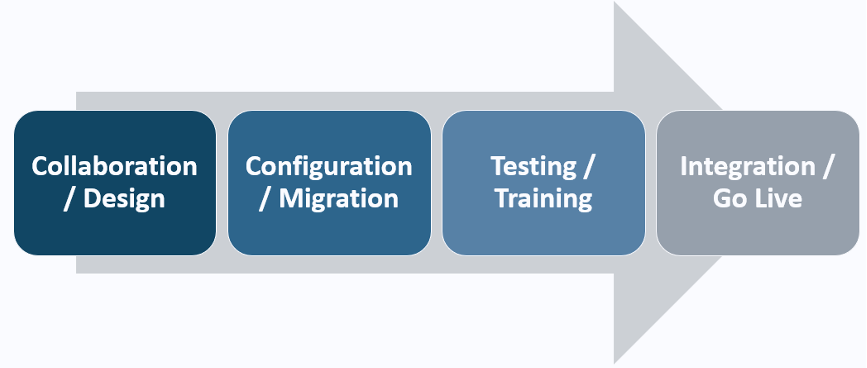
* More information on critical factors for a successful Deltek Costpoint implementation can be found here.
Why Government Contracting Knowledge Matters
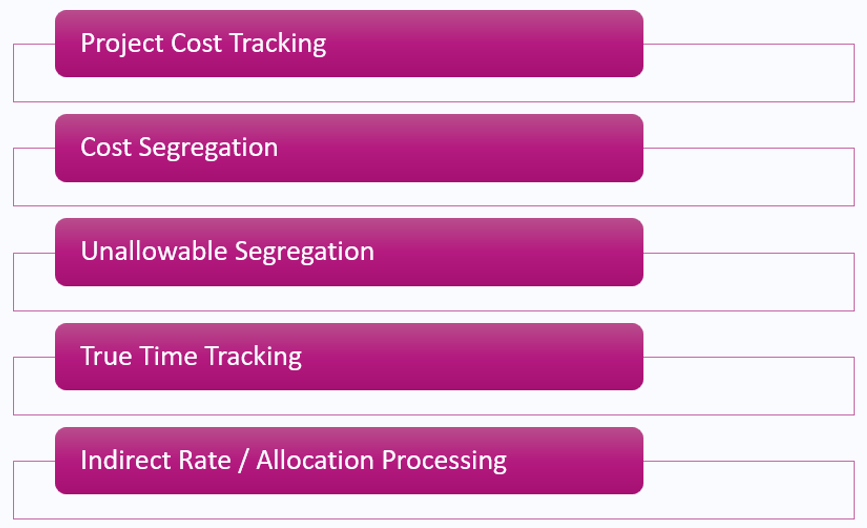
A key distinction between Redstone GCI and many Costpoint implementation partners is the depth of government contracting experience brought into the implementation process. System configuration decisions for government contracts differ from those for commercial companies. It is vital to understand the differences and how they impact decisions about ERP system design. Configuration for indirect rate structures, labor categories, project structures, billing requirements tied to contract types, and financial reporting are key elements to audit readiness. The configuration decisions made during implementation design have direct regulatory and compliance implications. With in-house government contracting expertise, our team helps clients identify these risks early and make configuration decisions that support contract requirements, reporting needs, and compliance expectations. Better decisions early in the implementation can reduce the risk of future compliance issues, audit findings, reporting problems, and costly system redesigns.
Navigating Implementation Challenges
Every implementation can involve unforeseen challenges, including data quality issues, delays in organizational decision-making, scope adjustments as the client better understands system capabilities, and differences between operational language and ERP terminology. Redstone GCI’s Deltek Costpoint team draws on experience from numerous implementations and applies established practices to help clients navigate these situations. Communication and planning are key. By holding regular status meetings with our implementation clients, we can identify potential problems early and make adjustments. Additionally, by maintaining a structured process, we can easily identify potential impacts and quickly adjust plans. Our team works to anticipate potential issues, provide practical guidance when challenges arise, and help clients make informed decisions when adjustments are needed. Our experience transforms implementation challenges into manageable adjustments.
Testing and Training are Critical
There are many common pitfalls during a Deltek Costpoint implementation. Insufficient testing and training are probably at the top of that list. Our team creates structured system test scenarios that validate processes from data entry through project and financial reporting. Testing helps confirm that the Deltek Costpoint environment produces the required outputs and supports the company’s government contracting compliance requirements. Along those same lines, we provide hands-on customized training for different business units within a company. This reinforces familiarity with the system and compliance-related workflows. Our team helps confirm that the Deltek Costpoint environment produces the required outputs and supports the company’s government contracting compliance requirements. We spend as much time testing and training as we do designing the system, to ensure users are comfortable at go-live. We want users to know how to use their system and extract the data they need from it. Rigorous testing and training prepare a company’s team to use the system effectively and efficiently from day one.
Preparing for Go-Live and Beyond
Go-Live is a transition point, not the finish line. At go-live, our goal is for the client's team to have a properly configured system, trained personnel, and a clear understanding of how the system supports government contracting compliance requirements. The system is ready. The team is trained. But the work does not stop there. Even after a successful go-live, there are still tasks to complete, such as loading initial balances, finalizing the data migration, and flipping the final configuration switches. Beyond that, every client works through a series of "firsts" in a live environment. Our consultants stay with the client's team through each of those moments, supporting the first live processing of labor, payroll, accounts payable, cash receipts, invoicing, month-end close, and related processes.
Building a Costpoint System for Long-Term GovCon Use
Choosing the right implementation partner is vital to the health of an ERP system. An implementation approach focused primarily on speed or cost may not provide government contractors with the structure, testing, training, and alignment with compliance requirements they need. Our team believes in an in-depth dive into discovery, design, configuration, testing, and training because each step affects how well the system supports current operations, future growth, and government contract requirements. An ERP system affects financial operations, compliance requirements, reporting accuracy, and long-term system usability. Our team has extensive Deltek Costpoint expertise combined with specialized government contracting knowledge. This expertise has helped us build and maintain Costpoint systems through the entire GovCon lifecycle. Again, be on the lookout for our next article, which examines what comes after implementation and how we support clients through every stage that follows.

Frequently Asked Questions (FAQs)
- Why can Deltek Costpoint implementations look different from one company to another? Deltek Costpoint implementations vary based on the company’s size, contract mix, accounting structure, reporting needs, and internal processes. For government contractors, the implementation approach may also need to account for billing requirements, indirect rates, project structure, labor tracking, and compliance expectations.
- Why does GovCon experience matter during Costpoint implementation? Government contractors often have software requirements that differ from those of commercial companies. Decisions about project setup, cost accumulation, billing, labor, indirect rates, and reporting can affect how well the software supports contract requirements and compliance expectations.
- What should be reviewed before Costpoint configuration begins? Companies should review how they currently manage contracts, accounting, operations, billing, reporting, and compliance-related processes. Understanding what works, what needs improvement, and what the company needs from the software helps reduce the risk of configuration decisions that later create problems.
- Why do configuration decisions matter after go-live? Configuration decisions affect how transactions are entered, costs are tracked, invoices are prepared, and financial and project data are reported. If the setup does not reflect the company’s operations and contract requirements, the company may face reporting issues, rework, or compliance concerns.
- Why are testing and training important before using Costpoint live? Testing helps confirm that the software produces expected outputs before the company begins using it for live transactions. Training helps employees understand how to use the software, follow required processes, and access the information they need.
- What happens after go-live? Go-live means the system is configured, tested, and the team is trained. It is a significant milestone, but not the finish line. Remaining tasks, such as loading beginning balances and finalizing data migration, still need to be completed, and every team works through a series of "firsts" in a live environment, from the first payroll run to the first month-end close.