

Government contractors are placing increased emphasis on structured opportunity management and pipeline visibility as business development efforts become more complex. Fragmented data and inconsistent processes can limit decision making and proposal readiness. Establishing centralized systems and disciplined workflows is becoming essential to support growth and maintain alignment across teams.
Highlights
- Fragmented Opportunity Data. As contractors grow, opportunity information is often dispersed across spreadsheets, emails, and individual knowledge, limiting visibility and consistency in capture and proposal efforts.
- Centralized CRM Adoption. Structured CRM solutions are increasingly used to consolidate contacts, activities, and opportunity data into a single system, improving coordination and documentation across teams.
- Process Standardization. Defined workflows, qualification criteria, and approval processes support more consistent opportunity management and reduce delays in decision-making and proposal readiness.
- Leadership Visibility. Real-time dashboards and reporting provide leadership with improved insight into pipeline health, enabling more informed go/no-go decisions and resource alignment.
- Data Discipline Requirements. The effectiveness of CRM systems depends on consistent data entry, ownership, and adherence to processes, with gaps creating risk of unreliable reporting and missed opportunities.
Are you tracking opportunities in a spreadsheet or other software, but find that most of the information about your potential customers and what’s happening with those opportunities is mostly in someone’s head or buried in emails? You aren’t alone. As government contractors grow, opportunity data often becomes fragmented across spreadsheets, inboxes, and individual knowledge. This lack of visibility can lead to missed opportunities, delayed decisions, and inconsistent capture strategies. As teams become more dispersed, it becomes increasingly important to establish a structured approach to managing contacts, activities, and opportunities in order to stay competitive and win contracts.
In the government contracting industry, opportunity tracking is not just about visibility. It supports capture planning, proposal readiness, and documentation of business development decisions. A centralized CRM helps ensure that opportunity data, teaming decisions, and pursuit strategies are consistently documented and accessible across contracts, teams, and audit reviews.
What is a Customer Relationship Management (CRM) Solution?
A CRM is a software solution that assists companies with managing contacts, companies, and opportunities. By consolidating this information, companies streamline their processes and improve relationships, thereby allowing you and your team to spend more time networking, creating outstanding proposals, and winning contracts.
Many government contractors recognize the need for a CRM, but underestimate the operational impact it can have on their business development efforts. The difference between managing opportunities manually and using a structured CRM solution is significant.
Without a centralized system, opportunity data is often spread across spreadsheets, emails, and individual knowledge. Teams may rely on inconsistent qualification approaches, including informal or undefined P-Win assumptions. Follow-ups can be missed, approvals may be delayed, and leadership often lacks clear visibility into pipeline health and upcoming opportunities.
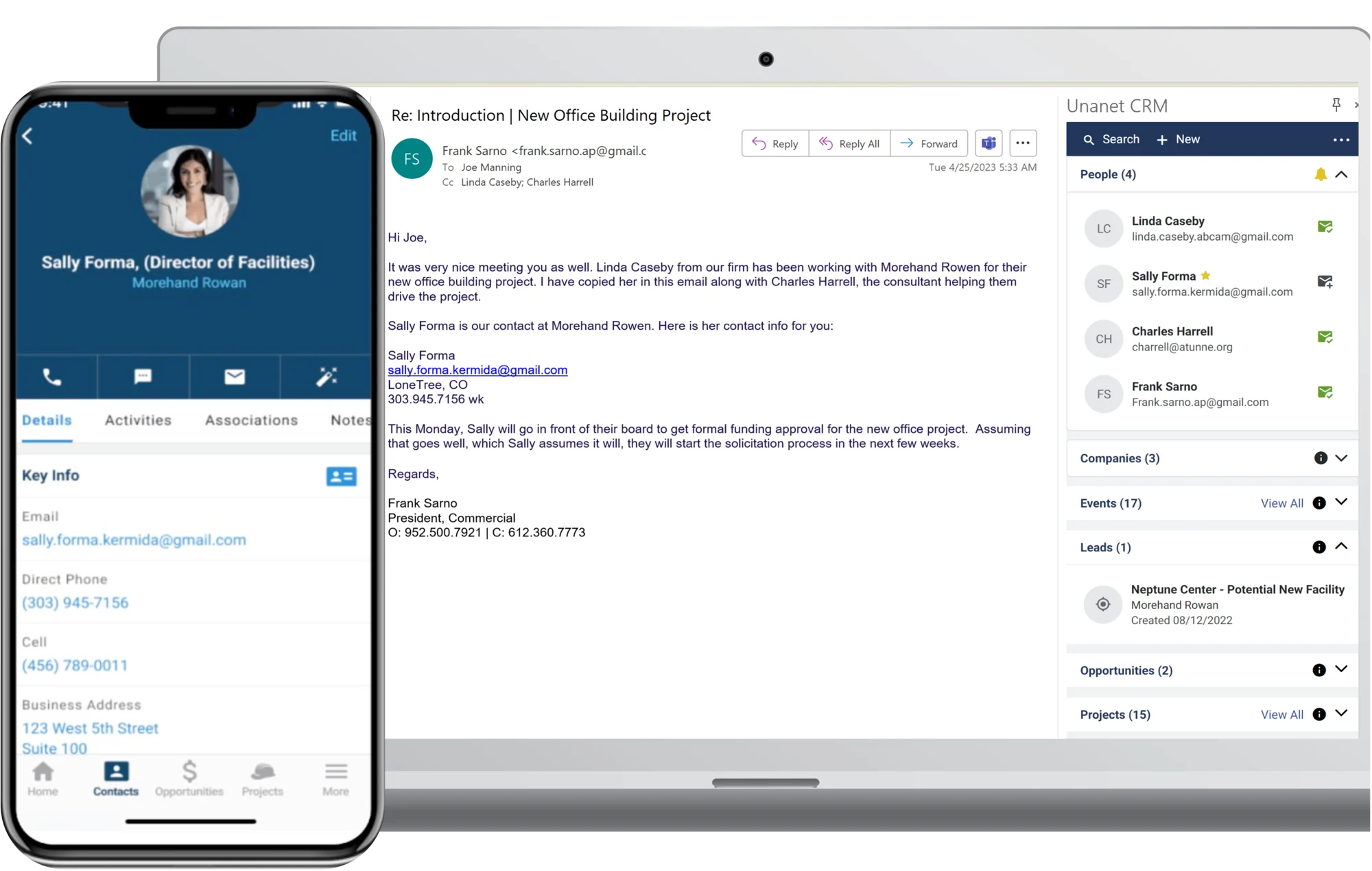
With Unanet CRM, opportunity tracking becomes structured, consistent, and accessible across the organization. One person can take a picture with the CRM mobile App to create a contact record from a business card, add notes and activities regarding conversations and meetings. Someone else can associate Outlook emails directly with that contact and any related opportunity records, creating a centralized repository of insights on potential clients.
Additionally, opportunity data is centralized into a single pipeline, allowing teams to follow a standardized capture and qualification process. Workflows can be configured to support reviews and approvals, helping ensure that required information is captured at the appropriate stages. Leadership gains real-time visibility into pipeline activity, supporting more informed decision-making and better alignment across business development, capture, and executive teams.
Optimize your Opportunity Tracking
Building on this structure, Unanet CRM helps teams actively manage opportunities as they move through the pipeline, ensuring that processes are followed and key information is captured at each stage.
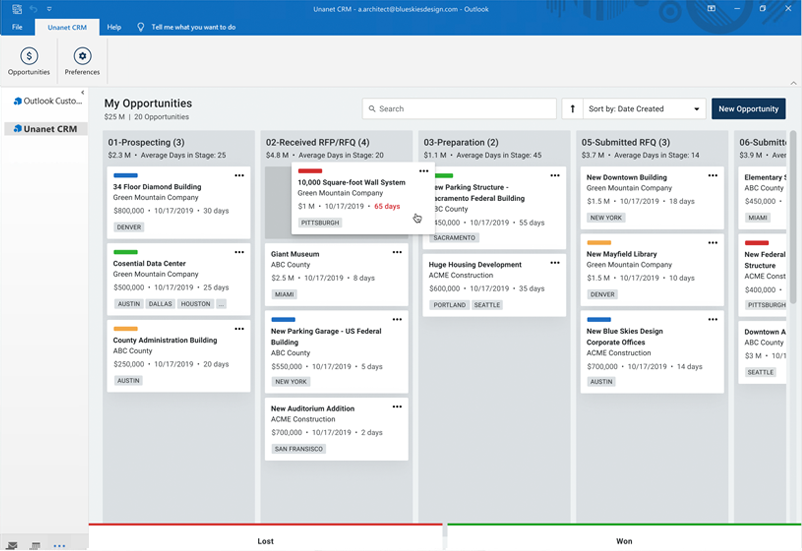
As opportunities progress, the CRM helps by getting all the right information and approvals in place, so nothing gets delayed. You can set up custom workflows for reviews, require certain fields based on the stage, and customize your forms to capture the qualifications or details you need. This creates a more structured and consistent approach, reducing last-minute data gathering and helping teams stay organized and aligned.
By structuring opportunity data consistently, teams can evaluate pursuits using defined criteria such as customer relationship strength, contract fit, competitive positioning, and resource availability. This allows leadership to make more objective go-or-no-go decisions rather than relying on fragmented or anecdotal information.
Reports and Interactive Dashboards
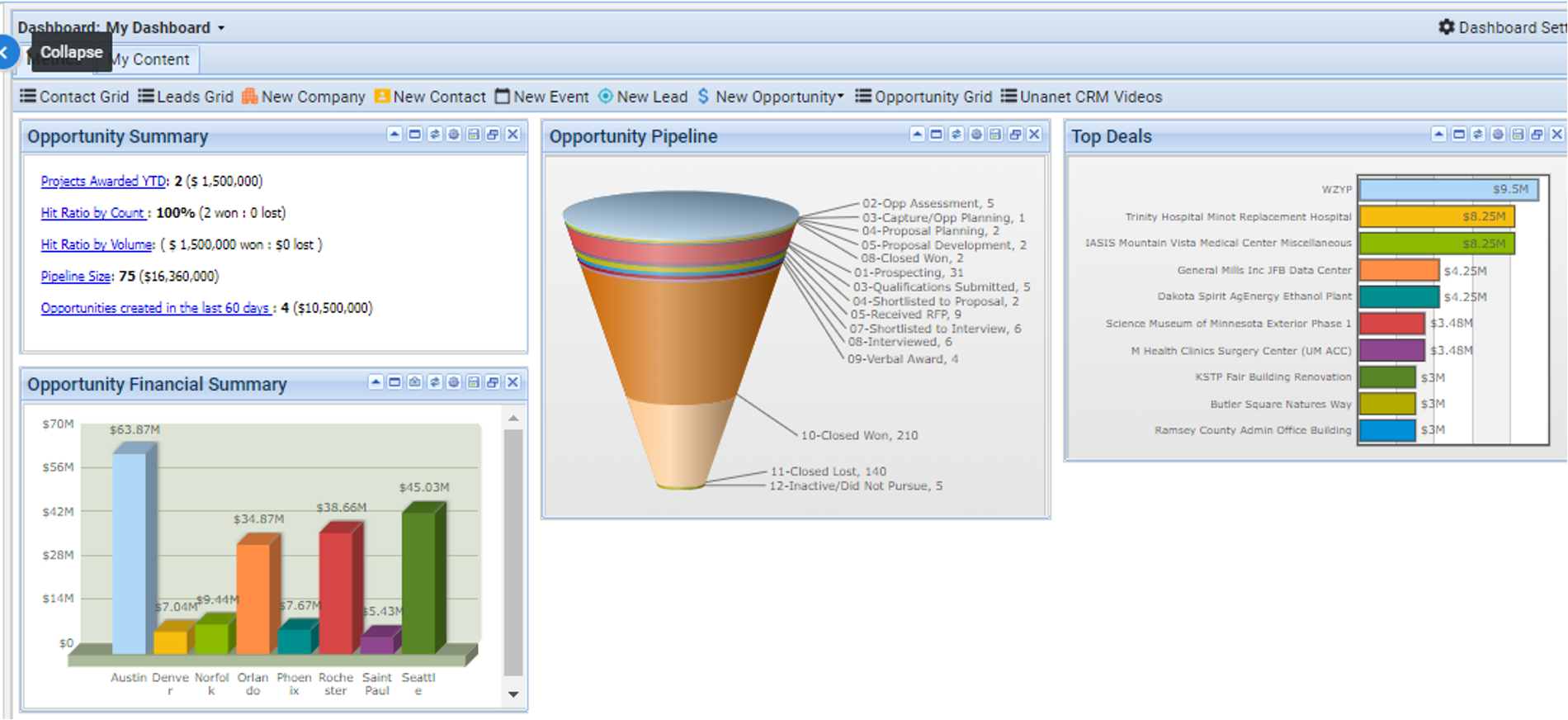
One of the best things about CRM is the ability to create custom dashboards to visualize your data. Imagine your entire BD team monitoring real-time trends in opportunities, financials, contract types, and estimated revenue based on P-WIN. If you’re using Unanet ERP, allow the connection with CRM to feed opportunity and P-Win data to see the full, weighted revenue forecast. By analyzing this data, your team can make informed decisions and adjust your approach quickly to maximize opportunity conversion rates.
When integrated with Unanet ERP, CRM data does not stop at the opportunity stage. It transitions into project execution, allowing organizations to compare estimated versus actual performance, refine pricing strategies, and improve forecast accuracy and future bid outcomes.
Data Consistency and Process Discipline
Remember, a CRM is only as effective as the data and processes behind it. Without consistent data entry, defined workflows, and clear ownership of pipeline information, visibility and reporting can quickly become unreliable.
Establishing a structure for tracking and maintaining opportunities is key to achieving long-term value from the system and supporting more consistent, informed decision-making.
Past Performance
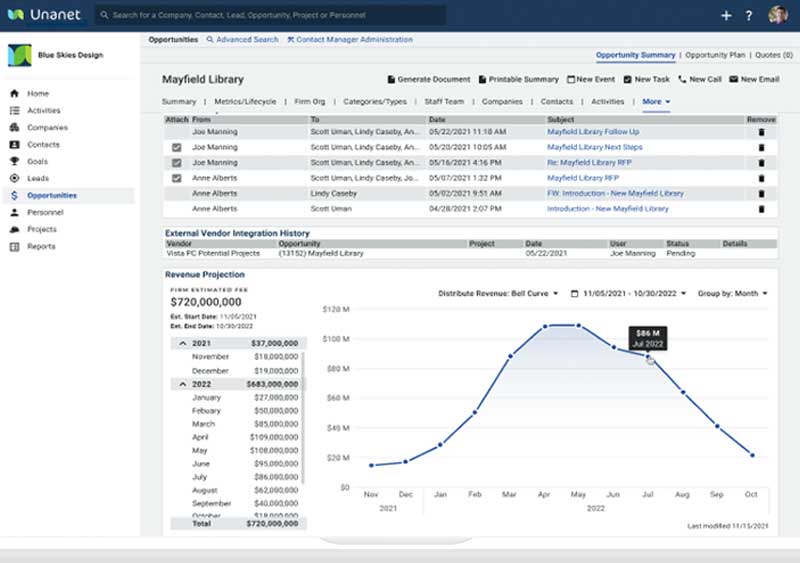
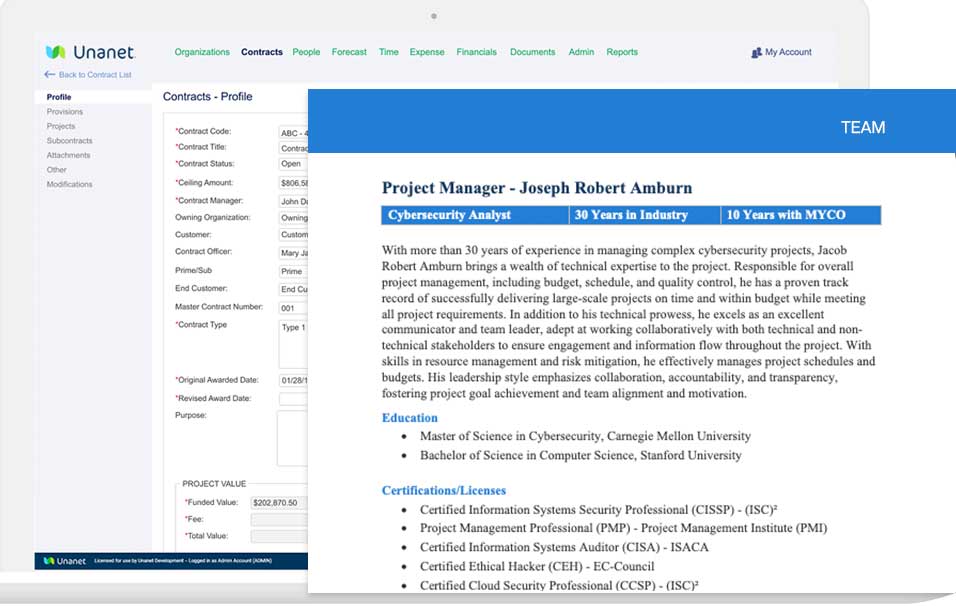
How hard is it to dig out the right past project performance data for the proposals you put together? With Unanet CRM, you can track past performance, including contract type, contract value, description, overall level of effort, capabilities, and the individuals who supported the contract, along with their skill sets and resume information. Add and update your corporate capabilities statements and other valuable language to repeat throughout new proposals.
By maintaining structured past performance records, proposal teams can quickly identify relevant experience, reduce last-minute data gathering, and ensure consistency across submissions. This supports higher-quality proposals, faster turnaround times, and more competitive positioning.
Strengthening Opportunity Management and Pipeline Visibility
Tracking contacts, leads, and opportunities effectively is essential for sustained business growth, particularly in the government contracting industry, where visibility, coordination, and timely decision-making directly impact outcomes. Unanet CRM provides the structure needed to centralize information, standardize processes, and improve visibility across the entire opportunity pipeline.
By organizing data, supporting consistent workflows, and delivering real-time reporting and dashboards, teams are better equipped to evaluate opportunities, align efforts, and focus on pursuits that offer the greatest potential value.
Unanet CRM is a standalone solution that any government contractor can use, not just current Unanet ERP clients. It is also a great option for companies using QuickBooks or other accounting software.
Redstone GCI supports organizations in implementing and optimizing Unanet CRM and ERP, including the AIM module, through system design, integrations, process alignment, training, and custom reporting. We also assist with developing desktop procedures and aligning systems with government contracting requirements, helping ensure your tools support both day-to-day operations and long-term growth.

Frequently Asked Questions (FAQs)
- What is a CRM, and why is it important for government contractors? A Customer Relationship Management system is a tool for tracking contacts, companies, and opportunities in one place. For government contractors, it supports capture planning, proposal readiness, and documentation of business development decisions. This helps ensure information is accessible and consistent across teams.
- What challenges occur without a centralized CRM system? Without a CRM, opportunity data is often spread across spreadsheets, emails, and individual knowledge. This can lead to missed follow-ups, inconsistent qualification processes, and limited visibility for leadership. Over time, these gaps can impact decision-making and overall pipeline management.
- How does a CRM improve opportunity tracking? A CRM creates a structured approach to managing opportunities by standardizing data entry, workflows, and approval processes. This helps ensure that key information is captured at each stage of the pipeline. As a result, teams can evaluate opportunities more consistently and stay aligned.
- Who benefits from using a CRM within an organization? Business development teams, capture managers, accounting, contracts, and executive leadership all benefit from a centralized system. Each group relies on accurate, accessible data to support decision-making, planning, and reporting. A shared system helps align efforts across departments.
- How do reporting and dashboards support decision-making? CRM reporting and dashboards provide real-time visibility into pipeline activity, opportunity status, and potential revenue. This allows leadership to assess trends, prioritize pursuits, and make informed go/no-go decisions. It also supports better coordination across teams.
- What is required to maintain effective CRM use? A CRM is only effective when data is entered consistently, and processes are followed. Organizations need clear data ownership, defined workflows, and regular updates to maintain accuracy. Without this discipline, reporting and visibility can quickly become unreliable.
 Katherine (Katie) Donnell serves as the Director of Unanet Practice Services at Redstone Government Consulting, Inc., where she leads the firm’s Unanet consulting practice in delivering expert implementation, optimization, and compliance support to government contractors. With extensive expertise in DCAA-compliant Unanet Time & Expense Tracking, Project Portfolio, and Financials, Katie plays a vital role in helping contractors build and maintain compliant, efficient financial and project management systems. As one of the first Unanet Certified Implementers, Katie was part of Unanet’s initial pilot certification program for non-Unanet consultants, investing over 300 hours in training, system development, and rigorous testing to obtain her certification. She holds Unanet Advanced Project Management training credentials and is also a QuickBooks ProAdvisor. Her technical expertise and real-world implementation experience make her a trusted advisor, frequently called upon by Unanet’s internal teams to support implementation projects as an external expert. Katie is also responsible for the continued growth and strategic oversight of Redstone GCI’s Unanet Practice, ensuring that quality of service, client support, and consultant development remain at the highest standard. She is committed to advancing the professional development and expertise of Redstone GCI’s Unanet consulting team, ensuring they stay at the forefront of industry best practices and evolving compliance requirements. At Redstone GCI, Katie serves as a primary point of contact for numerous small business clients, providing ongoing government cost accounting and compliance support. She regularly assists with monthly accounting close processes, ensuring accurate financial reporting for program management and executives. Her unique combination of software system expertise and compliance knowledge allows her to provide strategic, hands-on guidance to government contractors navigating complex regulatory and financial landscapes. With extensive experience in government contract accounting and compliance, Katie has assisted contractors with DCAA audit readiness, including SF1408 pre-award accounting system audits, provisional billing rate submissions, forward pricing rate development, and incurred cost submissions. She also helps clients design and implement compliant policies and procedures to support an adequate DCAA-approved accounting system. Prior to joining Redstone GCI, Katie worked in public accounting and government contracting, gaining operational experience with Unanet, QuickBooks, SpringAhead, Deltek T&E, ADP, Paychex, and QB Payroll. Her extensive background in accounting, compliance, and financial systems ensures that Redstone GCI’s Unanet clients receive the highest level of technical and regulatory expertise.